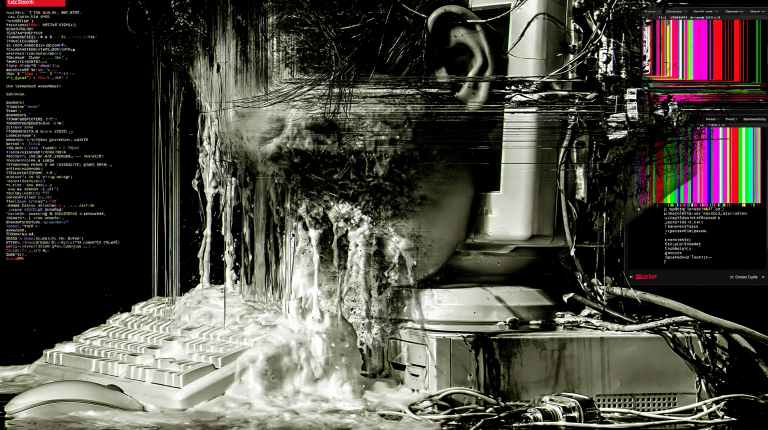

The Software We Lost — and How “Vibe Coding” Is Bringing It Back
Remember when software actually felt… personal?
Not the slick, product-managed kind of personal we see today. I’m talking about the rough-around-the-edges, oddly specific, deeply human kind of software. Tools built for one workflow. One team. Sometimes even one person.
They were imperfect. Sometimes fragile. Often discontinued. But they fit.
And when they disappeared, they left behind a weird kind of absence. Not just missing features—but a missing feel.
For years, it felt like that loss was permanent. Software became centralized, subscription-obsessed, and painfully standardized. If your workflow didn’t match the product? You adapted. Or you paid for five different tools and tried to glue them together with duct tape and prayers.
But something is shifting.
Enter “Vibe Coding”
There’s a new way of building software now. People call it “vibe coding.”
Instead of rigid planning and long production cycles, you build things conversationally. Iteratively. Often with a little help from AI.
You don’t start with a perfect spec document. You start with a feeling:
“You know that old note app I loved? Yeah—I want something like that, but with tagging like this, and it should export clean JSON.”
And then you just… build it. Quickly.
This is a big deal because it lowers the barrier to recreating lost software. That obscure database tool you adored back in 2012? The weird internal dashboard your old company used? The little script that died when your OS updated? You can rebuild them now. Not perfectly, maybe—but meaningfully.
Custom Tools Are Making a Comeback
People are starting to build small, focused, in-house tools again. Not because they have to, but because they can.
We’re talking about:
- Lightweight data managers built for specific datasets
- Custom editors for weird, niche file formats
- Internal dashboards that actually reflect real workflows (not generic KPIs)
- Personal knowledge systems that aren’t locked into someone else’s database schema
The difference this time? Speed.
What once required a whole team can now be prototyped by one person with AI assistance.
Imagine a small research team that relied on a discontinued annotation tool. Today, they could rebuild a working version in a couple of days: import their data, define their tagging system, and keep tweaking until it feels right again.
Local LLMs Change the Game
A huge part of this shift is local language models.
Models like Gemma (and others you can run on your own machine) act like conductors for these custom tools.
They can:
- Parse and organize data
- Act as a natural language interface to your local databases
- Automate messy workflows
- Combine text, images, and structured data in one pipeline
And best of all—they run locally.
That means you’re not forced to send everything to a remote API. Your data stays where you want it. Your tools work consistently, without relying on external services that might change or disappear.
For example, a local setup could let you say:
“Take all my PDFs, extract the tables, normalize them, and store everything in a searchable local database.”
No cloud dependency. No API fees. No rate limits.
Breaking Free from Subscription Chaos
Let’s be honest—modern software comes with a hidden tax: subscriptions.
One or two feel fine. But they add up fast. Soon you’ve got:
- Multiple tools solving the same problems
- Monthly costs that creep up every year
- Your data locked into proprietary systems
- Sudden price hikes or feature changes you can’t control
Local, custom-built tools offer a way out. Not always cheaper in time, but often more sustainable in control.
You’re trading:
- Recurring fees → upfront effort
- Vendor lock-in → true ownership
- Generic features → exactly what you need
And with AI-assisted development, that upfront effort is shrinking faster than ever.
This Isn’t Just Nostalgia
Look, this isn’t about living in the past.
It’s about taking what made old software special—its specificity, its personality, its weird charm—and combining it with modern capabilities:
- Multimodal interfaces
- Natural language interaction
- Flexible data pipelines
- Rapid iteration
The result isn’t a return to old tools. It’s a new kind of software that feels just as personal—but is way more powerful.
The tools we lost aren’t really gone anymore.
They’re just becoming starting points.
Let’s build the tools to shape our final frontier!
WEBSTERIX