Pixel History…
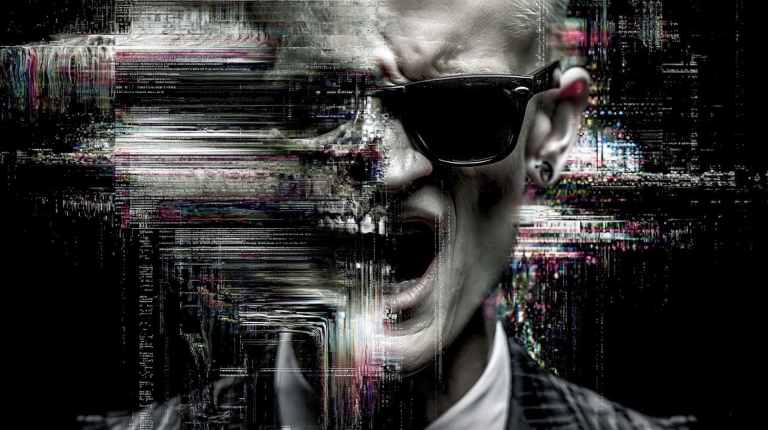
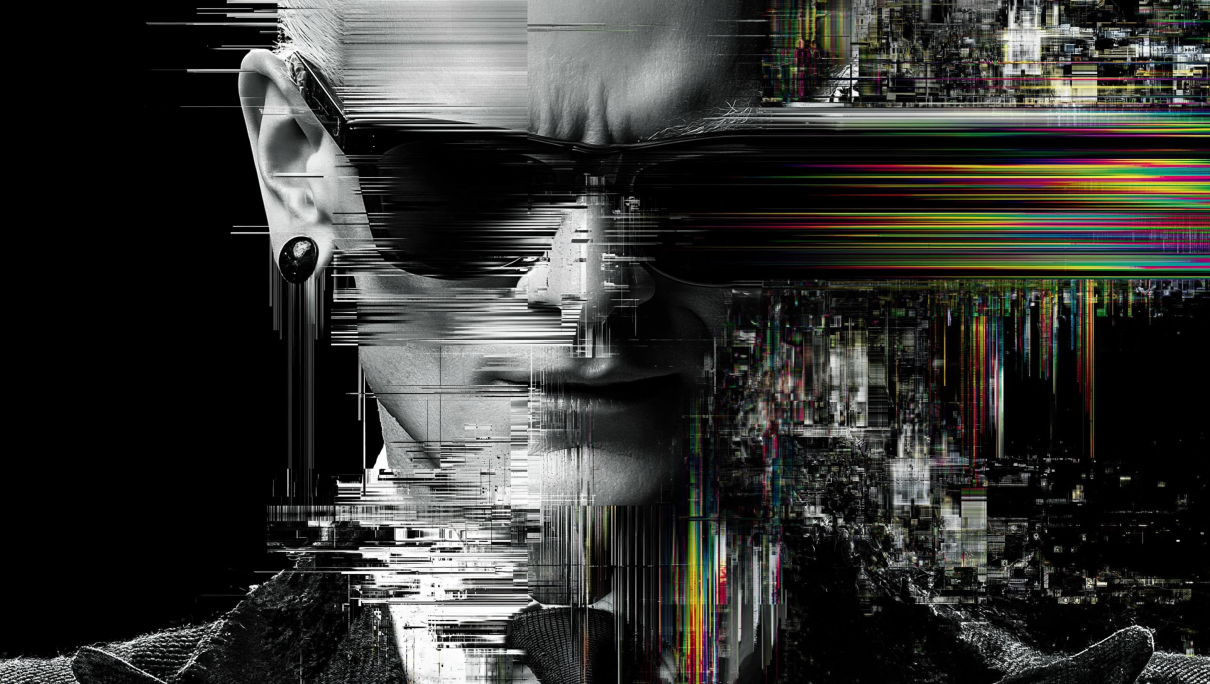
Long before voice assistants answered our questions and AI systems wrote essays, there was a strange, stuttering digital face on television screens: Max Headroom. Introduced in the mid-1980s, Max wasn’t just a fictional character—he was a cultural signal. A glitchy, sarcastic “computer personality,” he embodied both the fascination and unease of a world beginning to imagine machines not just as tools, but as voices.
Max Headroom was presented as an artificial intelligence, a digitized human consciousness living inside a computer network. While technically he was a clever visual effect and a human actor in makeup, the idea he represented was far ahead of its time: a computer that could speak, react, joke, and engage in conversation. Not commands, not punch cards—conversation.
But this vision didn’t emerge in isolation. Nearly two decades earlier, Star Trek had already planted a powerful idea into the cultural imagination: the computer as a conversational partner. Crew members didn’t type queries—they spoke. “Computer,” they would say, followed by complex, natural-language questions. And the machine would respond instantly, intelligently, and often contextually.
At the time, this was pure science fiction. Real computers were rigid and unforgiving. Interaction required precise syntax, specialized knowledge, and often frustration. There was a vast gap between human language—messy, ambiguous, emotional—and machine language—structured, literal, and exact.
What both Star Trek and Max Headroom shared was a belief that this gap could be closed.
Max Headroom, in particular, added something new to the vision: personality. The Star Trek computer was calm, neutral, and utilitarian. Max, on the other hand, was erratic, humorous, even slightly rebellious. He didn’t just process language—he performed it. That hinted at a deeper possibility: not just interaction with machines, but relationship.
Fast forward to today, and that once-fictional idea has become part of everyday life. We speak to our phones, our cars, our homes. More importantly, we interact with AI systems that don’t just parse commands but generate language—fluidly, creatively, and often convincingly.
Modern large language models represent a turning point. Unlike earlier systems that relied on fixed rules, these models learn patterns from vast amounts of text. They don’t “understand” in the human sense, but they simulate understanding well enough to carry on conversations, answer questions, and even adopt tones or personalities.
In a way, they are closer to Max Headroom than to the Star Trek computer. They can be witty, informal, or stylistically expressive. They can adapt to the user. They can feel—at least on the surface—like something more than a tool.
And yet, the vision is still unfolding.
We are now in a moment where speaking to a computer in natural language is no longer remarkable—it’s expected. The interface has shifted from buttons and commands to conversation. This changes not only how we use technology, but how we think about it. When interaction feels human, the boundary between machine and partner becomes less clear.
Max Headroom was once a satirical exaggeration. Today, he looks almost prophetic.
What seemed like a glitch in the system was actually a glimpse into the future: a world where computers don’t just compute—they communicate.
I mean, I don’t know who I am, or where I am, or why I’m here, but I’m here, and I’m not leaving.
MAX HEADROOM